I am becoming an iron water mum; an ongoing two-way process of mattering – bringing something to matter through action, or gesture. A becoming drawn out of the immateriality that exists within and between bodies. Tenuous, conditional, strenuous – a labour. It slips within and out of the folds of tradition, of heritage, lineage, of unconditionality. It seeps through hairline cracks in the stuff of permanence. It is ‘autogenesis’ – that which ‘creates life through non-living things’.
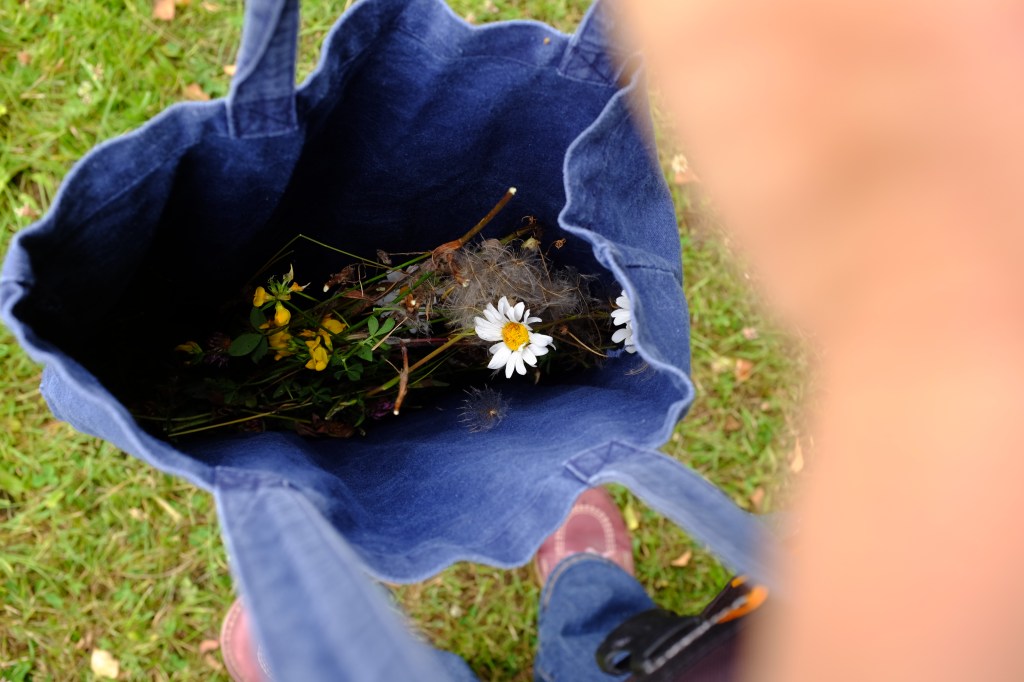
In June I met online with textile artist, Maisie Utting to talk about making dyes and paints using plants and other stuff gathered from my nearby surroundings. I described wanting to take a walk, with Phyllis and our son, down to the river to collect water to paint with, and to gather plants and materials on the way that could be used to make the paper and the colour I use in my animation work.
We talked of tears
Rubbing leaves. Brown
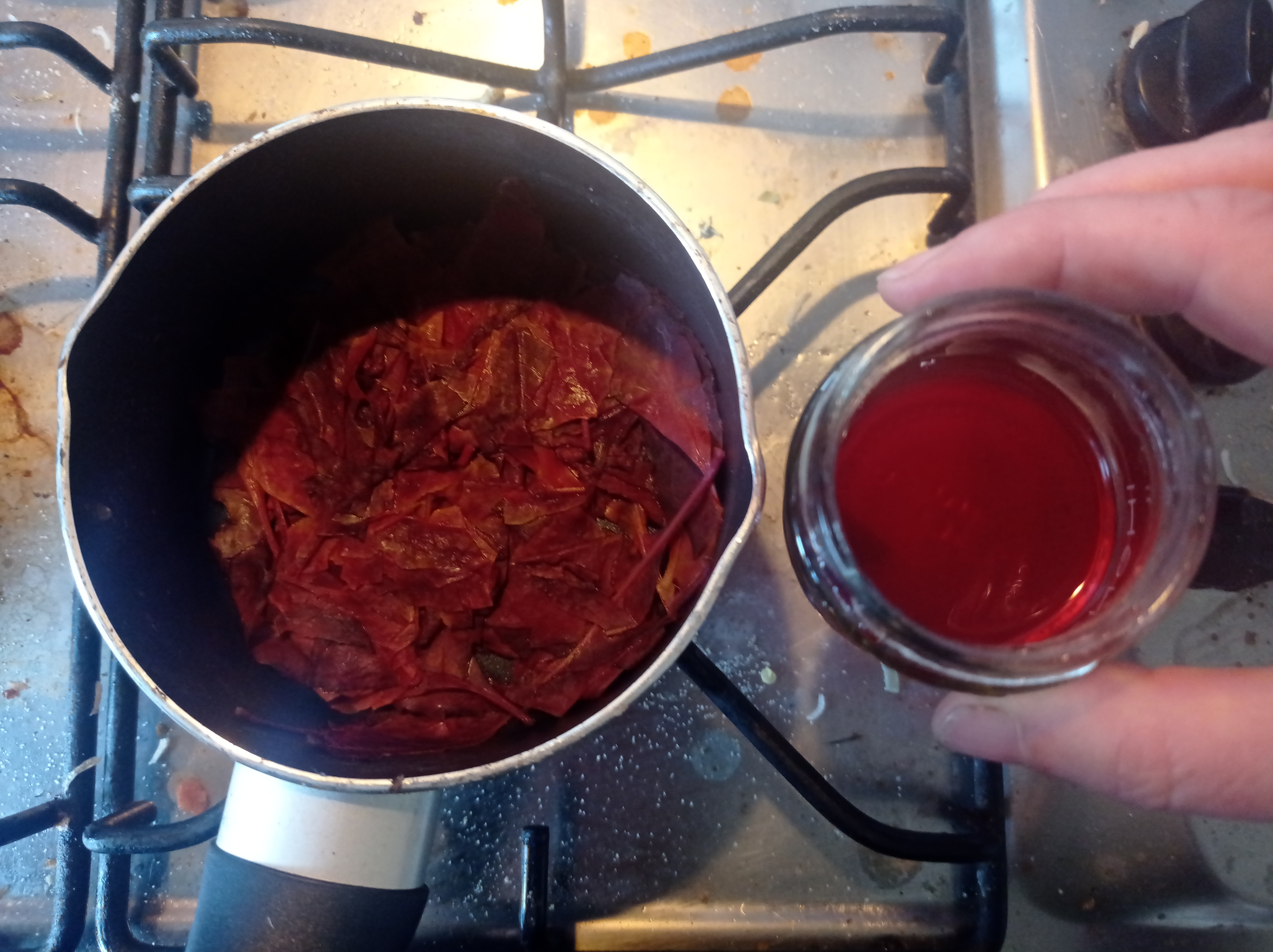
Skins boil and run
Down through the green
Sting of nettles.
Thistle milk
Buttercup juice.
Considered cuts
Stems seep. Straining
Water drops let
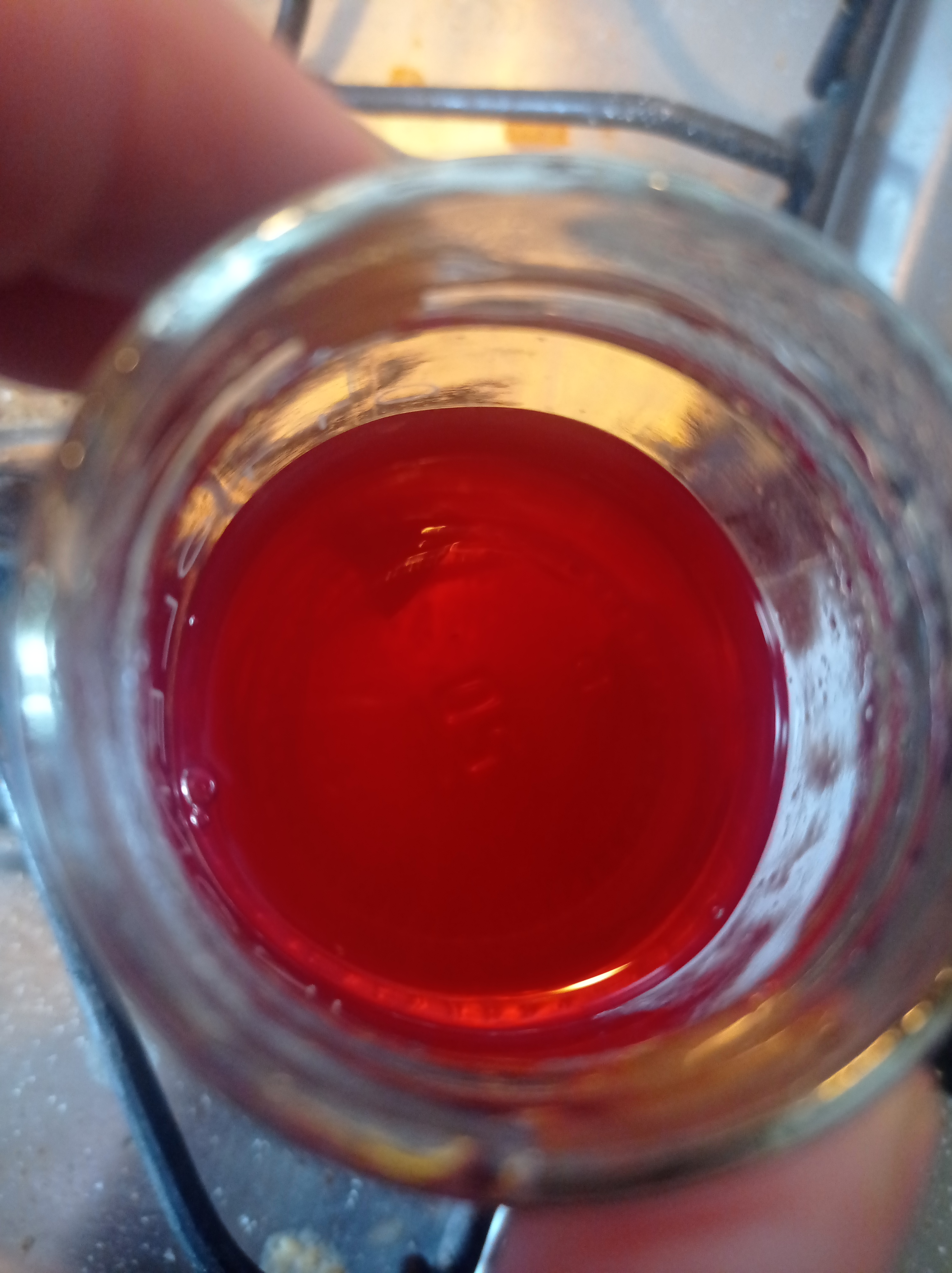
Soft stains bring forth
Palettes of place.
Dyeing the ground.
Deepening tone.
Plants – their uses, histories and meanings – are overwhelming. Just thinking about their names trips me with stories and symbolism. I said I hoped a walk would limit pathways, and that choices of flora would be governed by the direction we took, and therefore practical and straightforward. A walk provides the subject. A beginning and an end. A source
I know where we will go.
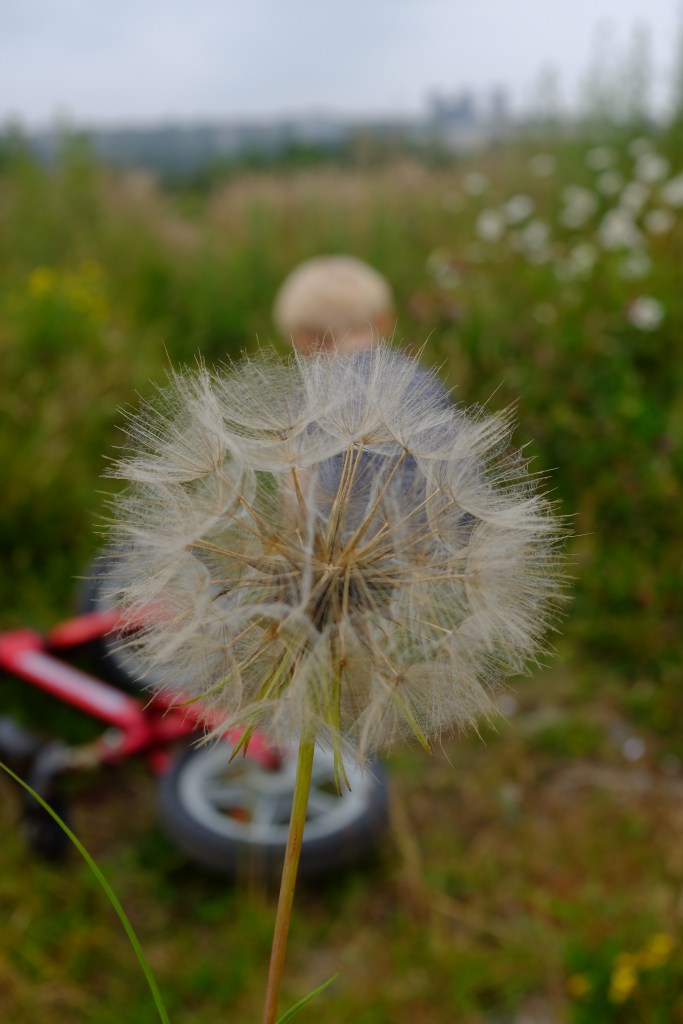
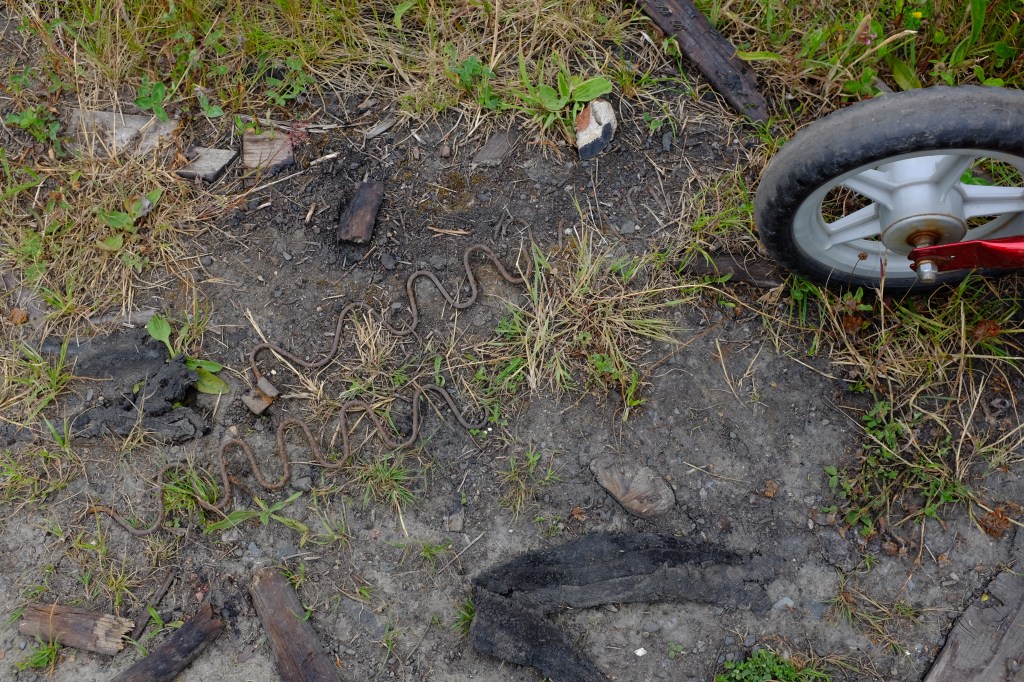
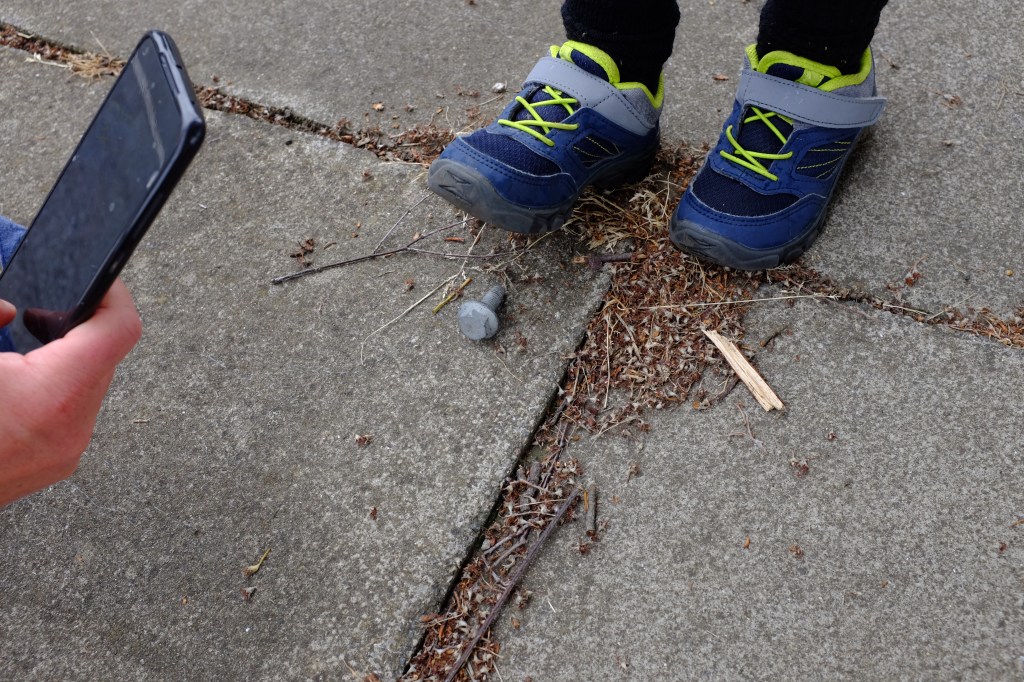
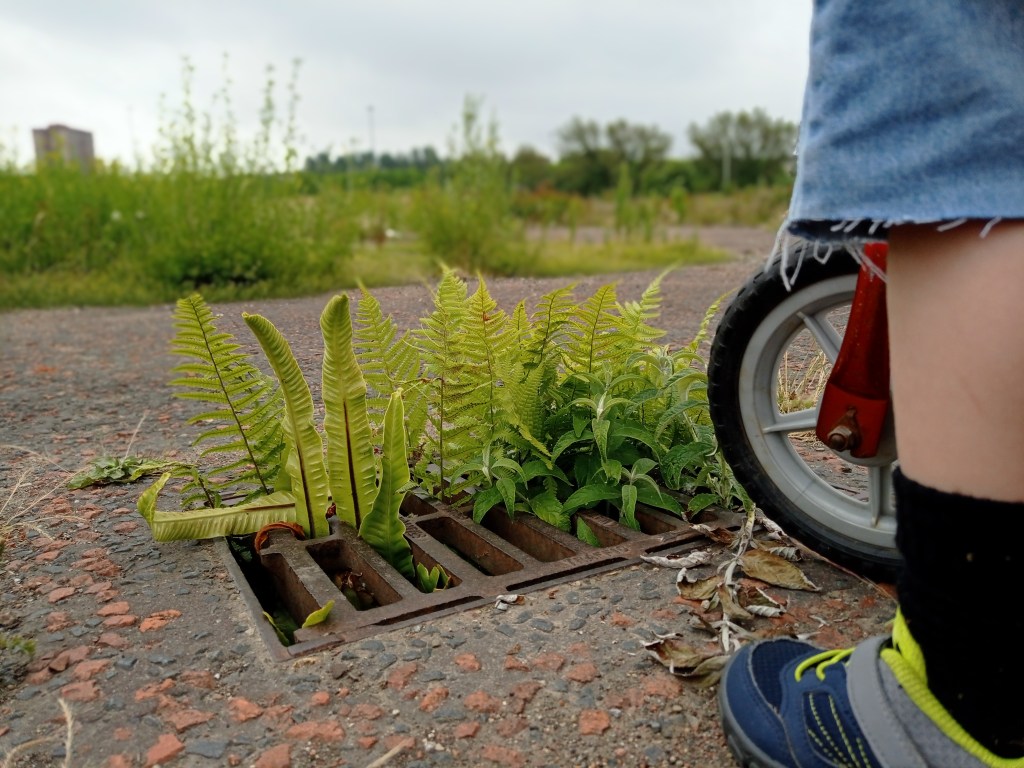
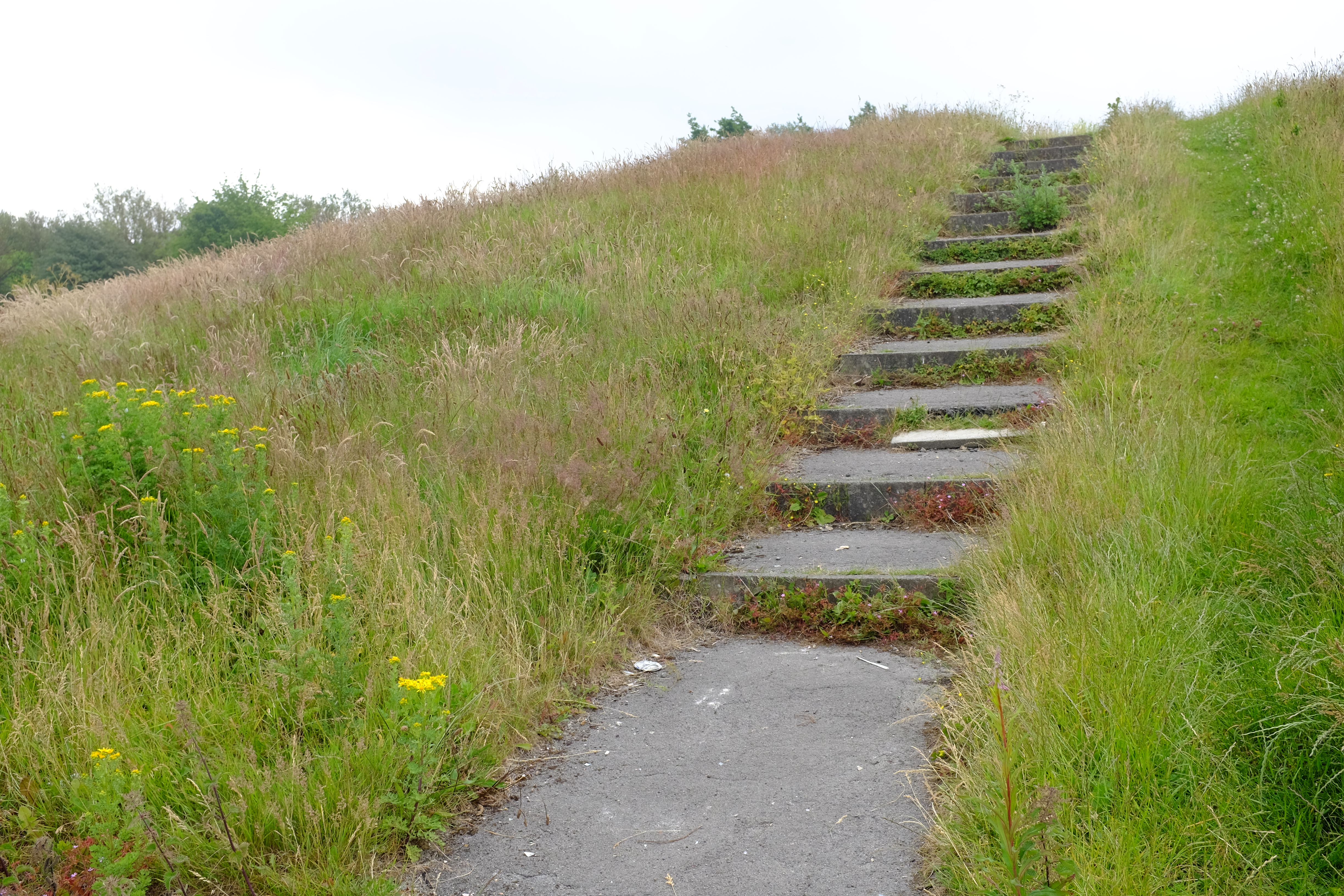
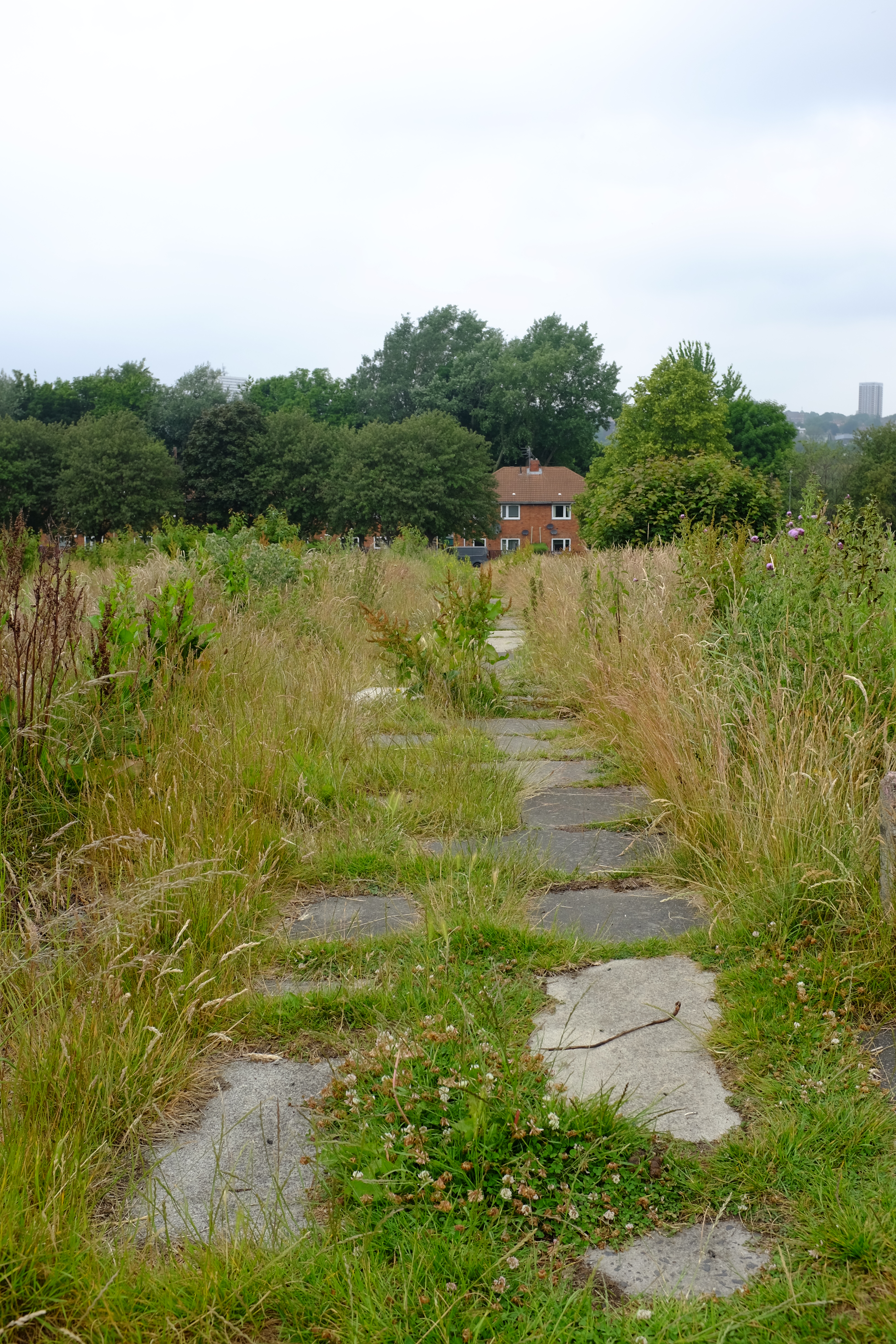
Down the bank beside our house there is a road that no longer leads anywhere – even the decorative coal truck that marked the entrance to the housing estate has been removed. It is a patch of land that only recently was a demolition site. As we walked to the river, we watched 200 or so houses just go. The last remaining invisible resident had defiantly drawn their nets to the diggers and skips until they too disappeared. Now, the road has folded into the fragments of the buildings and belongings, gardens, and fences. A light shade, a red-hatted gnome, a flash of mirror, a yellow square of bathroom-wallpapered plaster. What has not been picked over at night, becoming slowly consumed by vegetation. Now there are desire paths through dog roses, buddleia, celandine, vetch, dandelion clocks, ferns, daisies, poppies, clover.
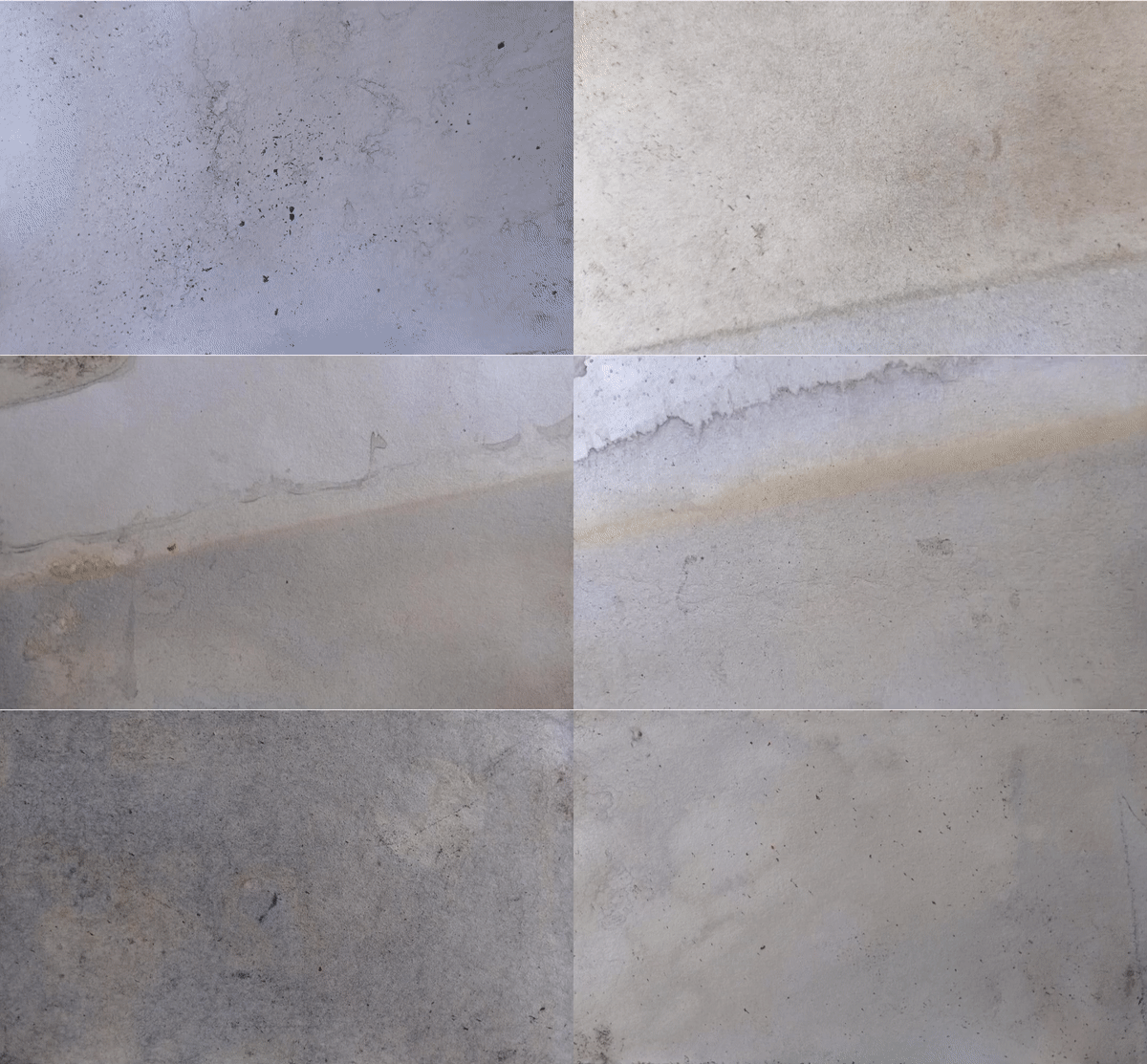
We talked about ephemeral colour, of barely present marks made with watery strokes. I realised then that I didn’t mind if my paintings dry up and leave barely a trace on paper once they have been digitally documented.
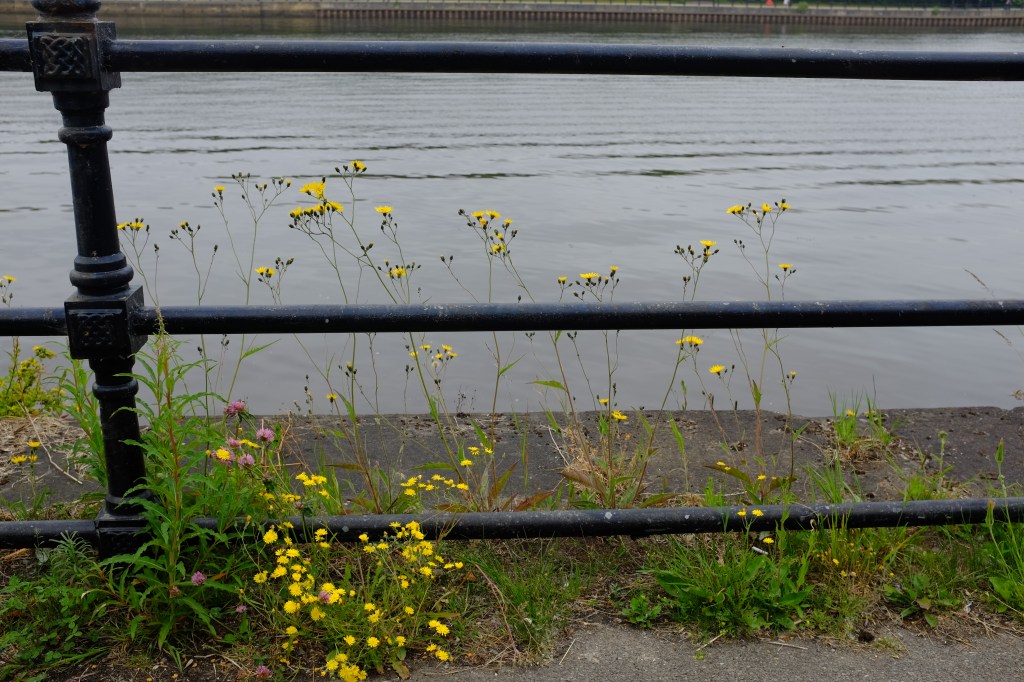
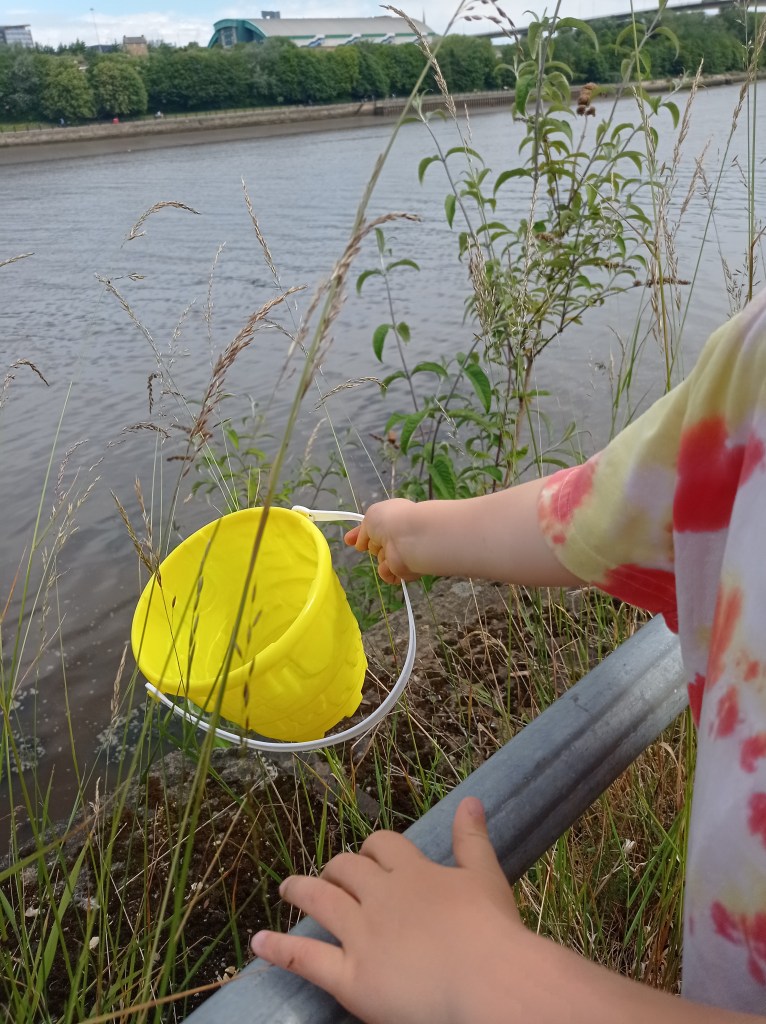
Over the field and across the road is a path to the river’s edge. Images taken by Phyllis, June 2021
I told Maisie I wanted the water used in my work to have passed through places that mean something to the three of us – our rivers.
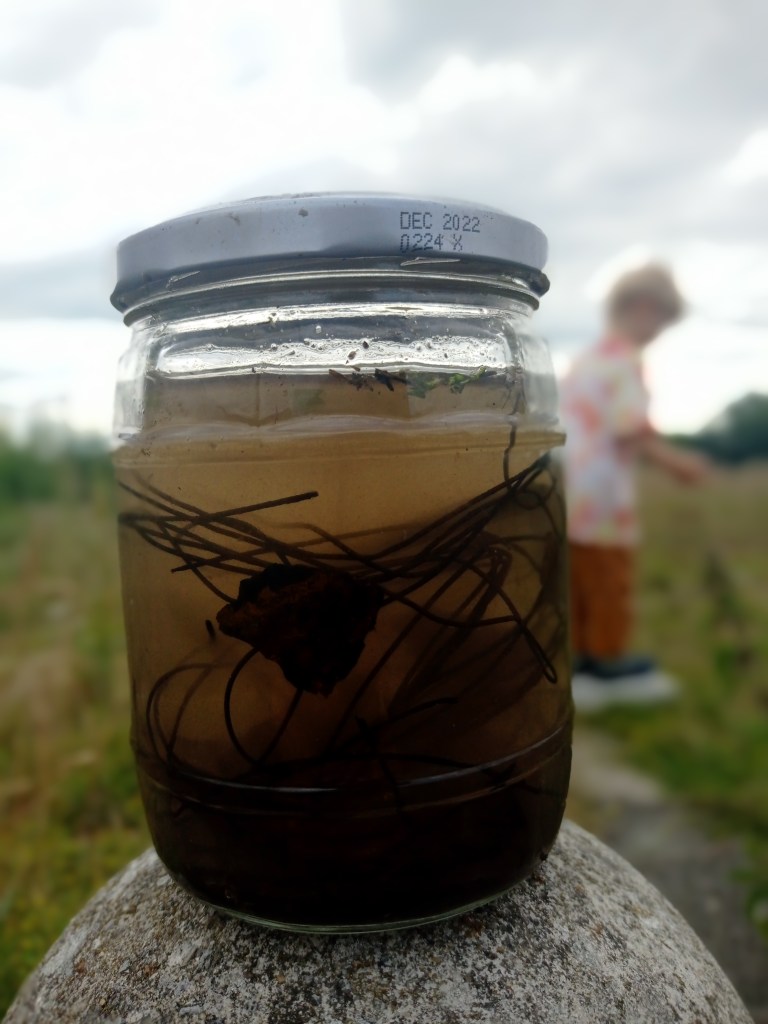
I wanted the walks to conclude with the collecting of water that flows through places we recognise as part of our individual selves. I wanted those waters to help shape our new, collective identity.
I wanted those waters because they contain traces of the places passed through most recently, and through the course of its ancient continuous flow; hills, clouds, bodies of humans, plants and animals, seas, lakes, rain, snow, breath, puddles, the centre of the earth and the edges of our biosphere.
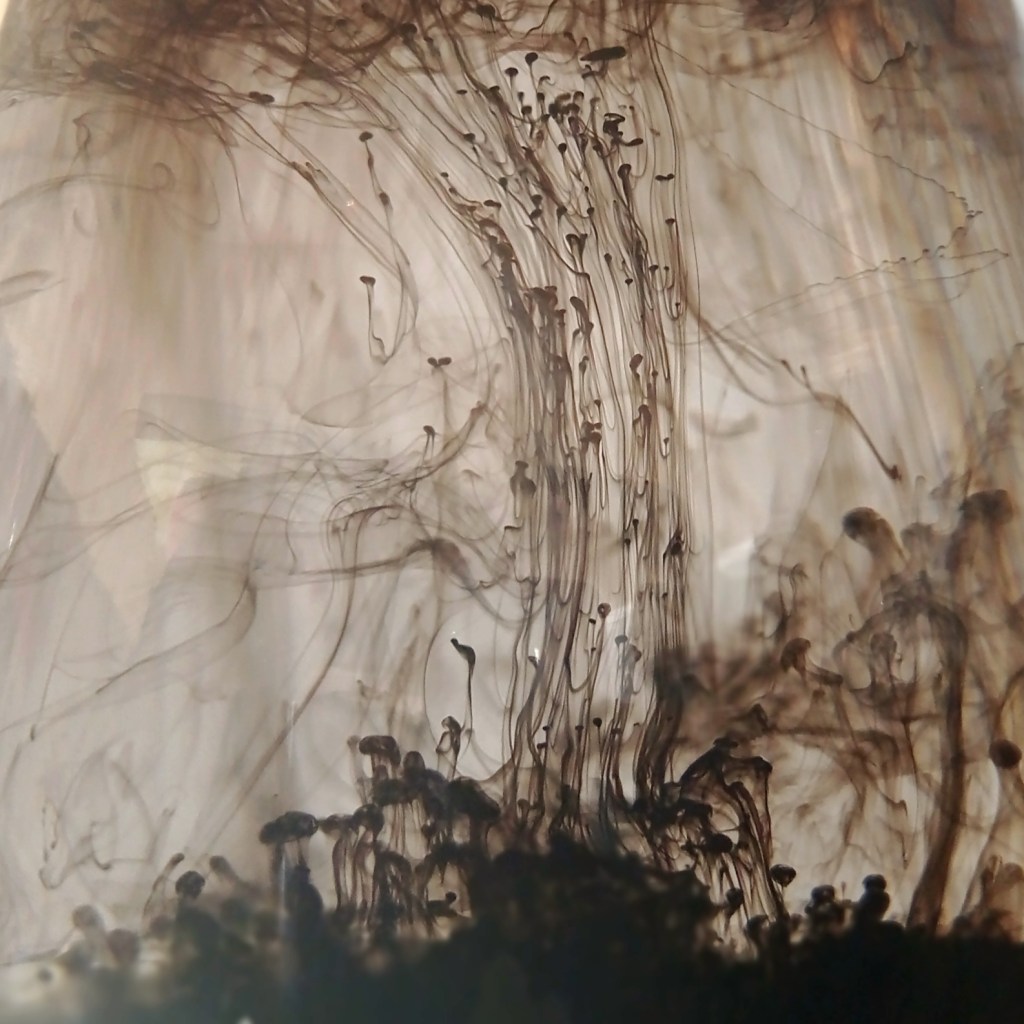
I wanted the water to be a creative material that I could use to make work.
I wanted this water to symbolise the role, existence and process of becoming a mother through adoption and within a queer, lesbian household.
.
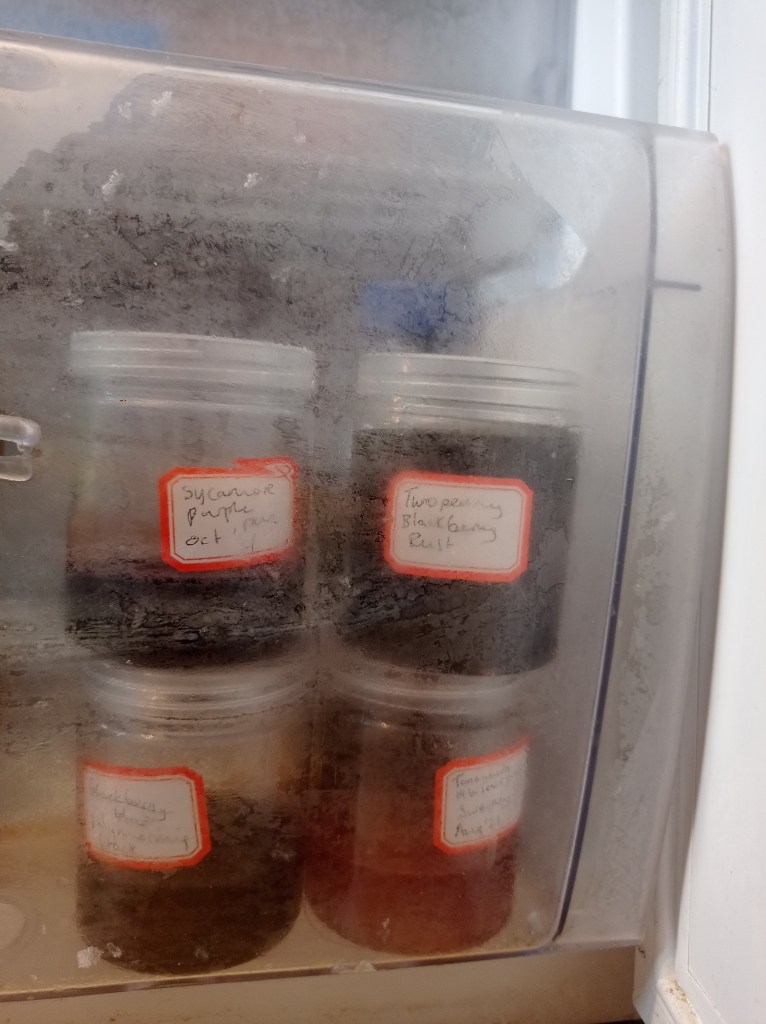
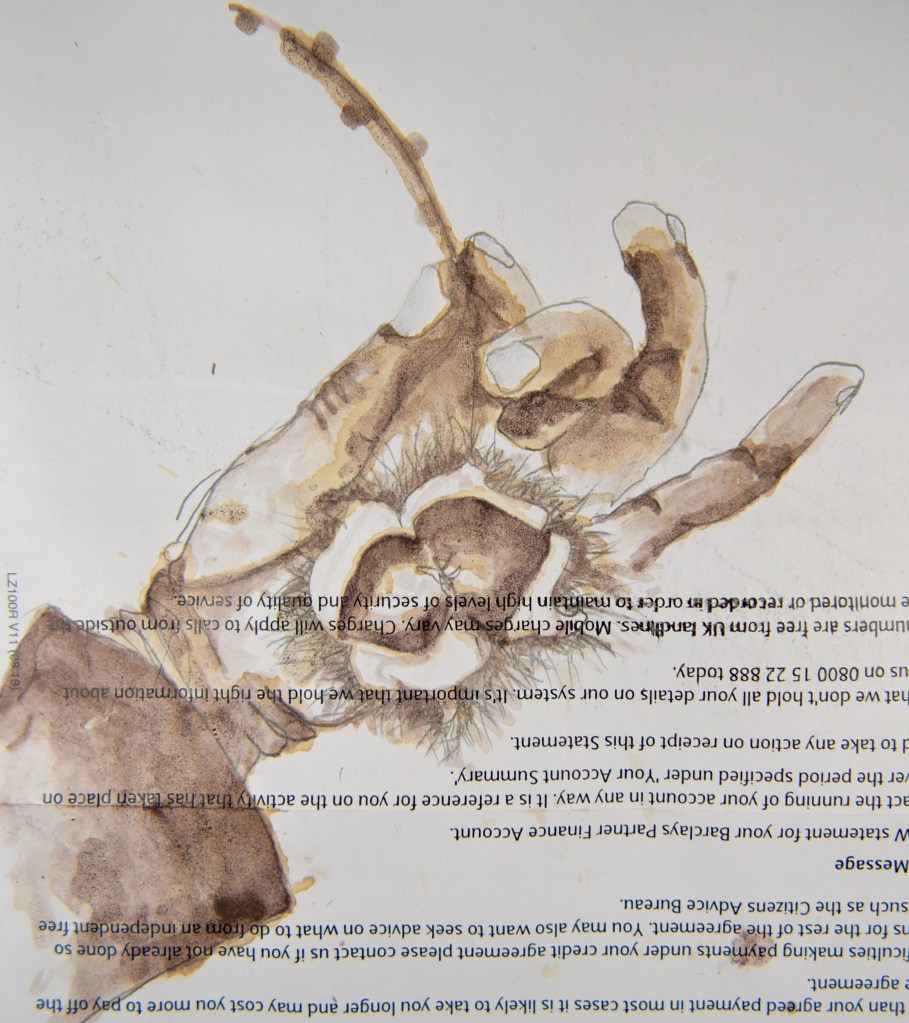
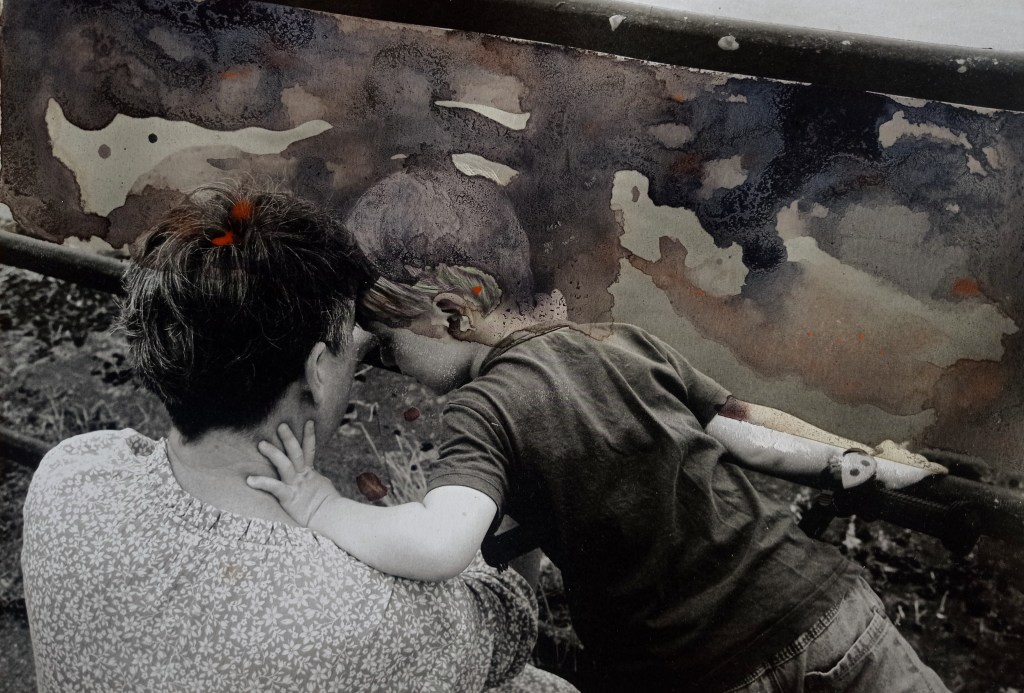
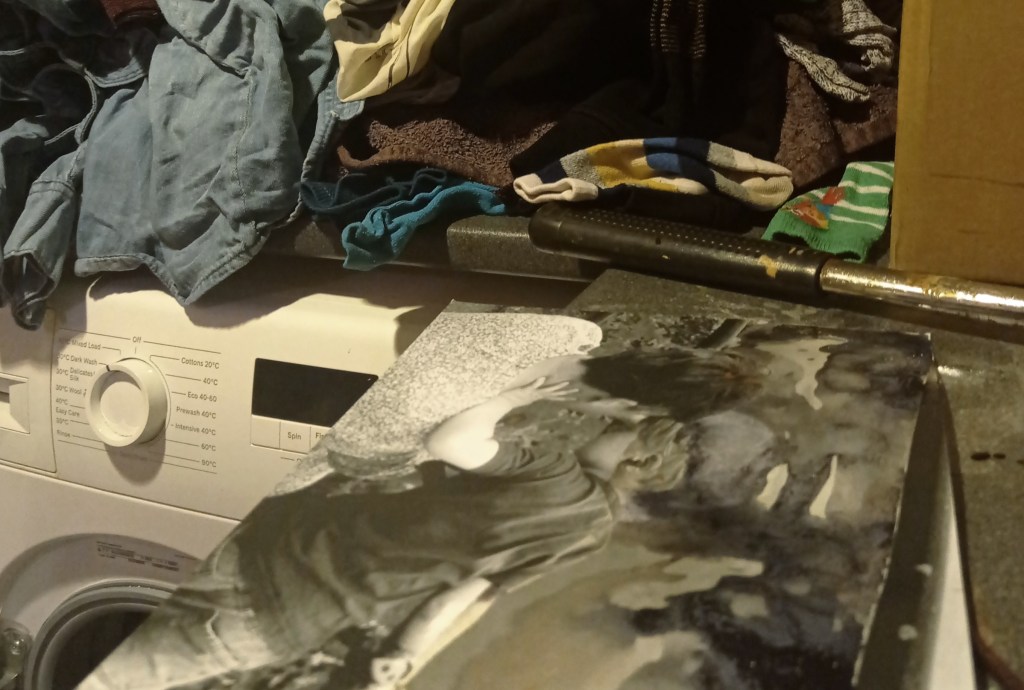

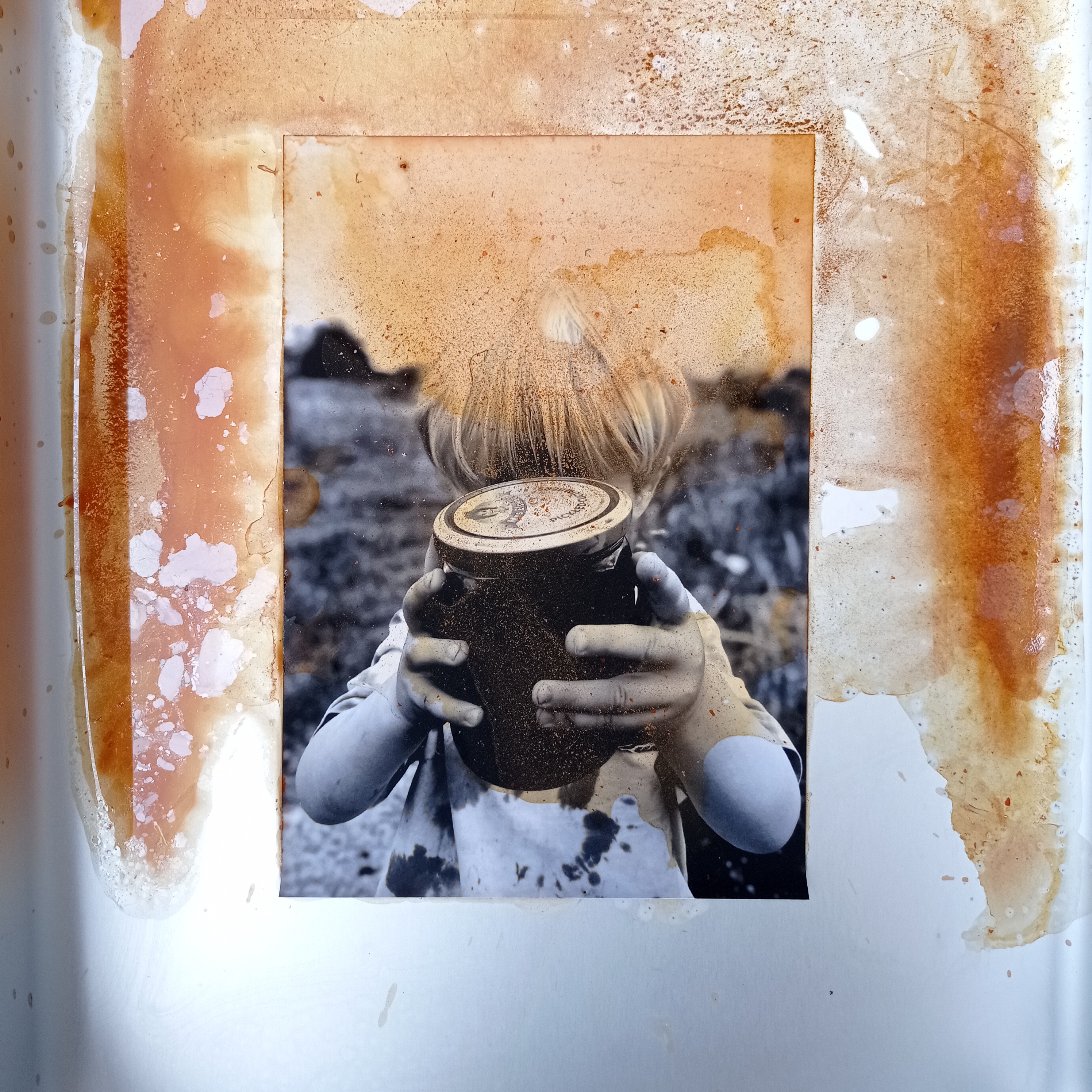
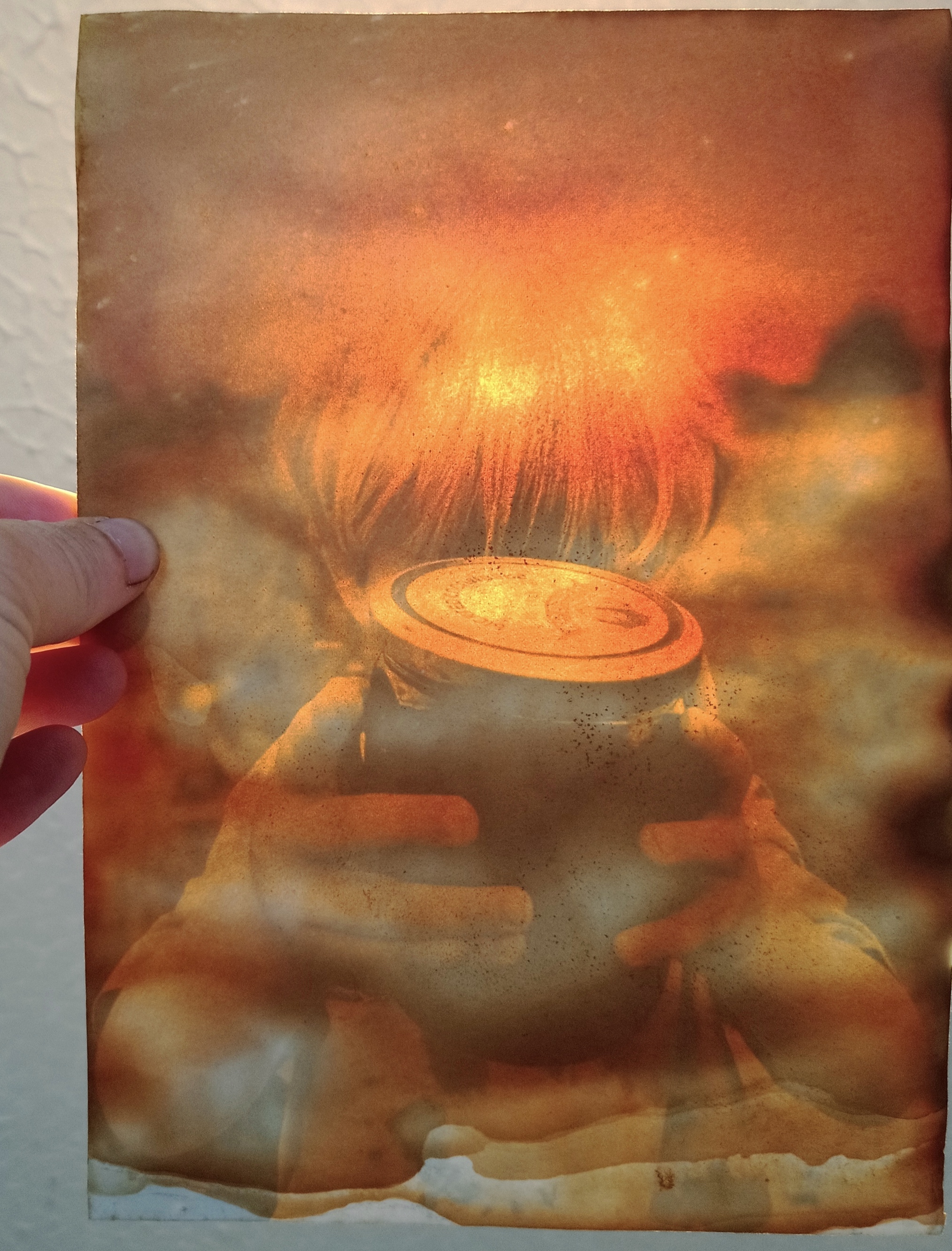
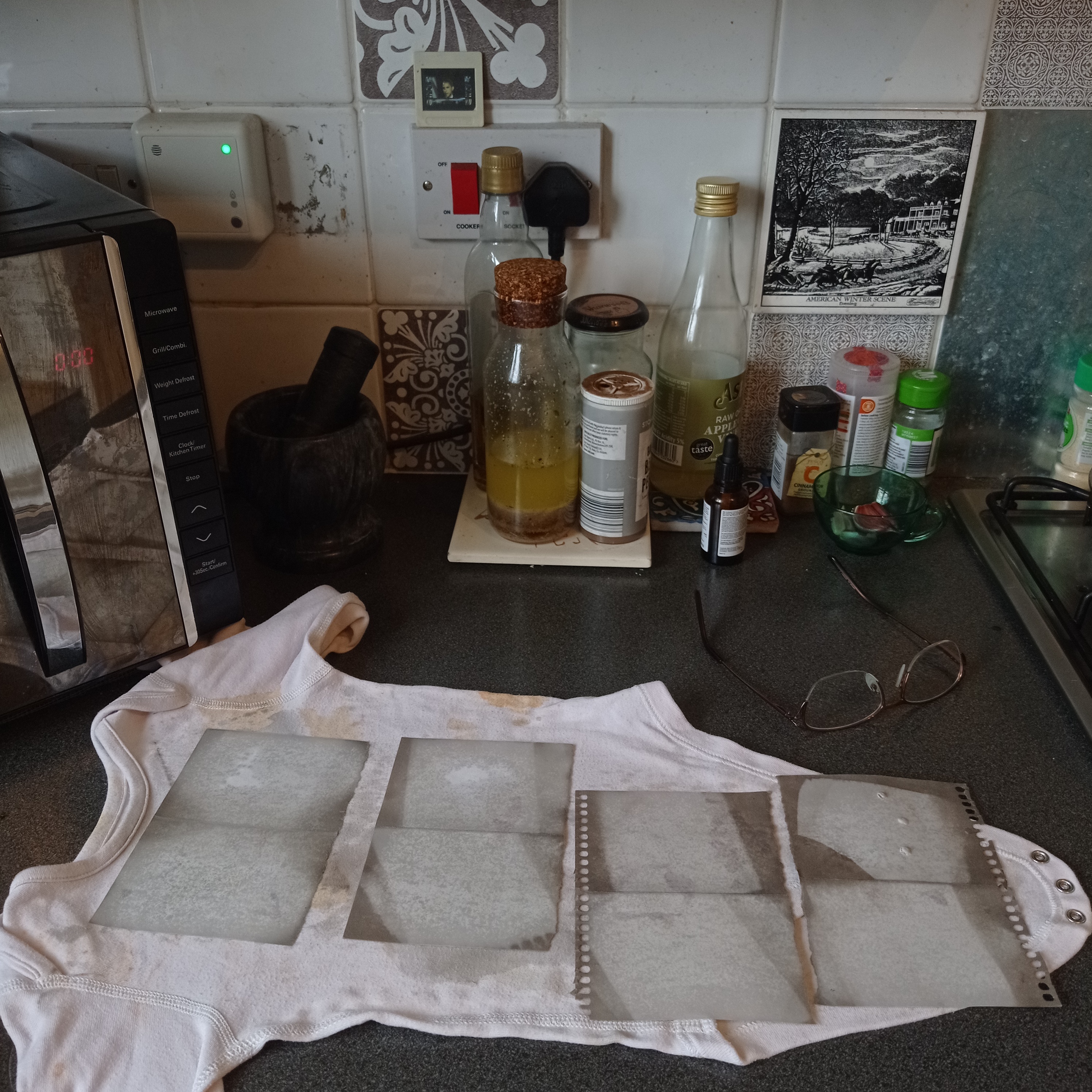
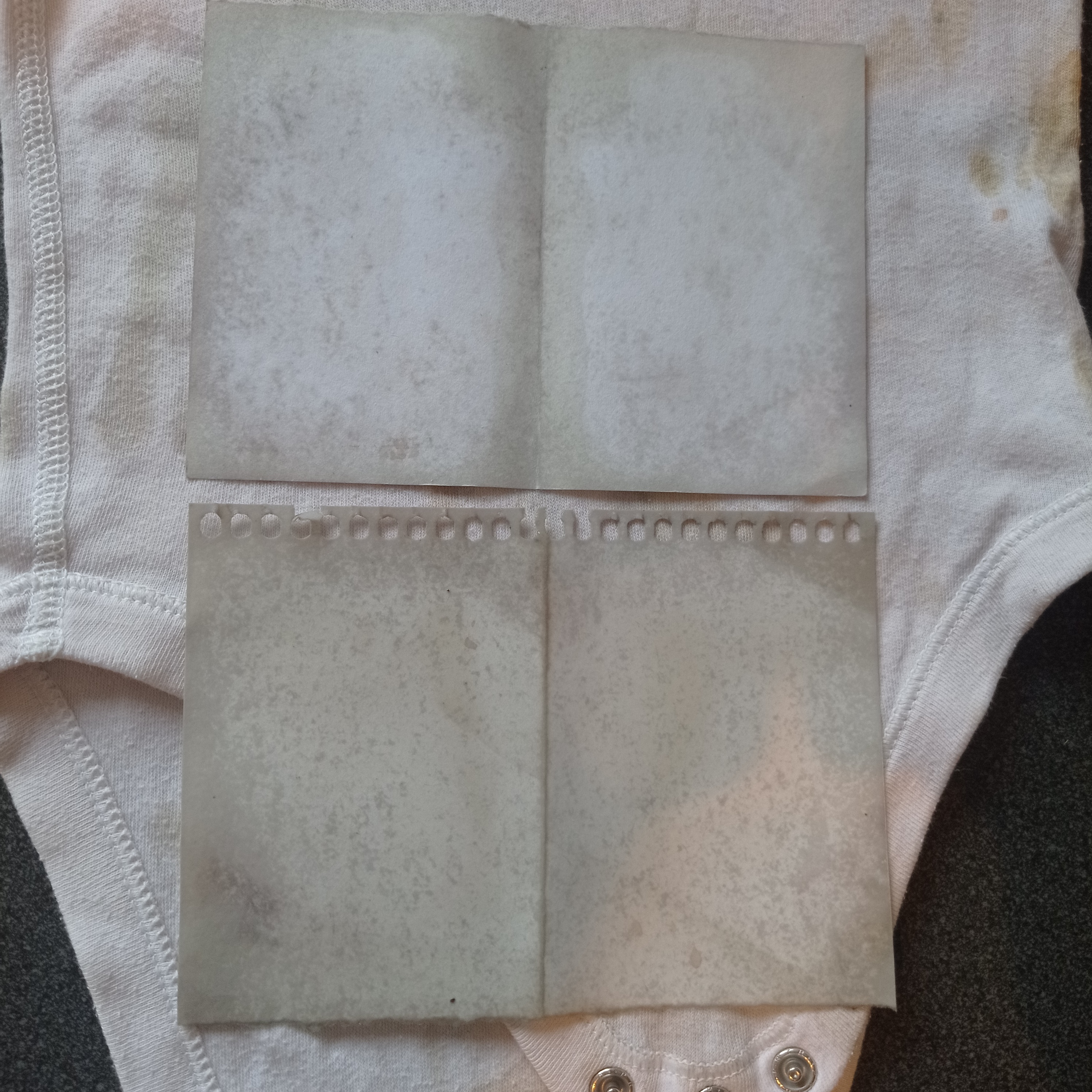
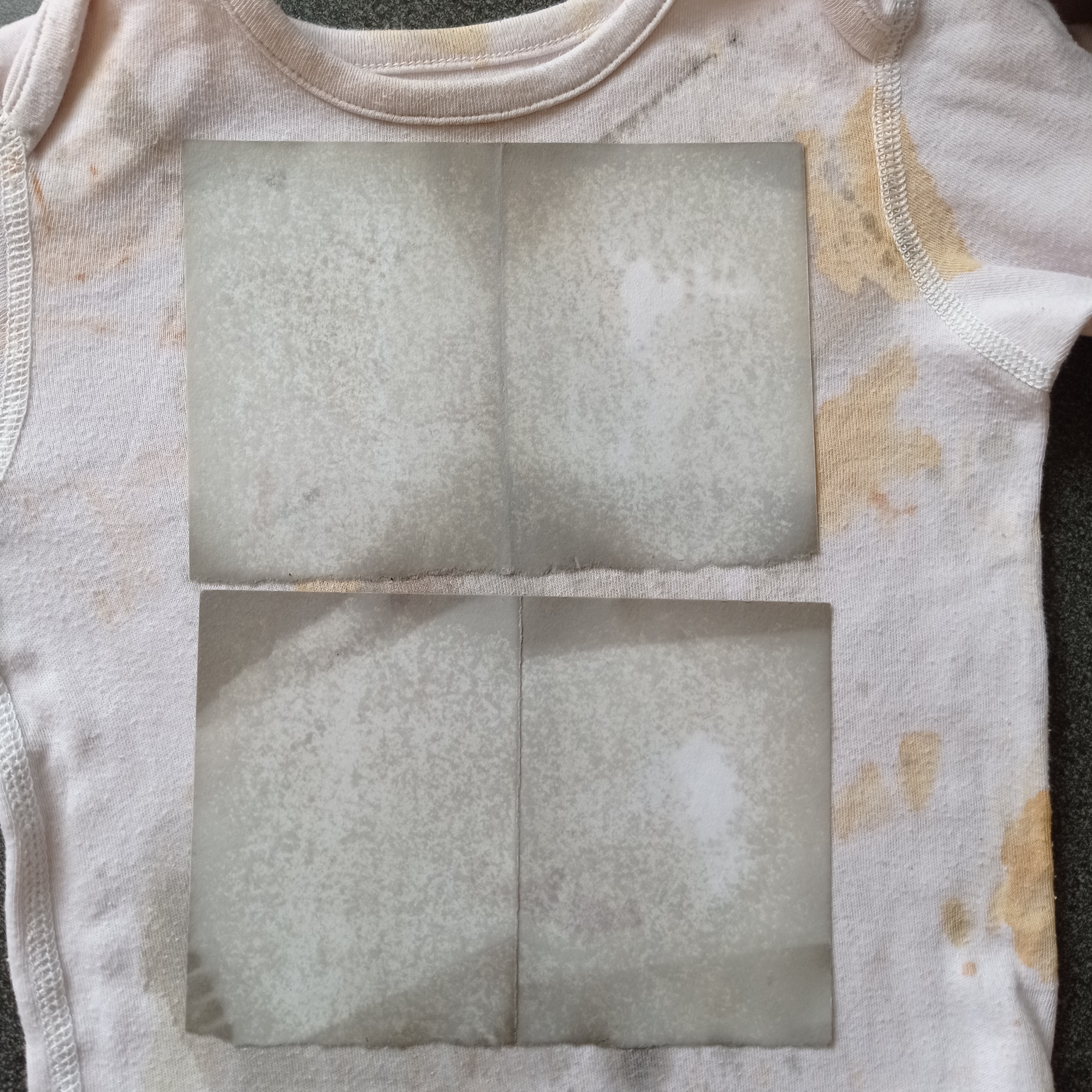
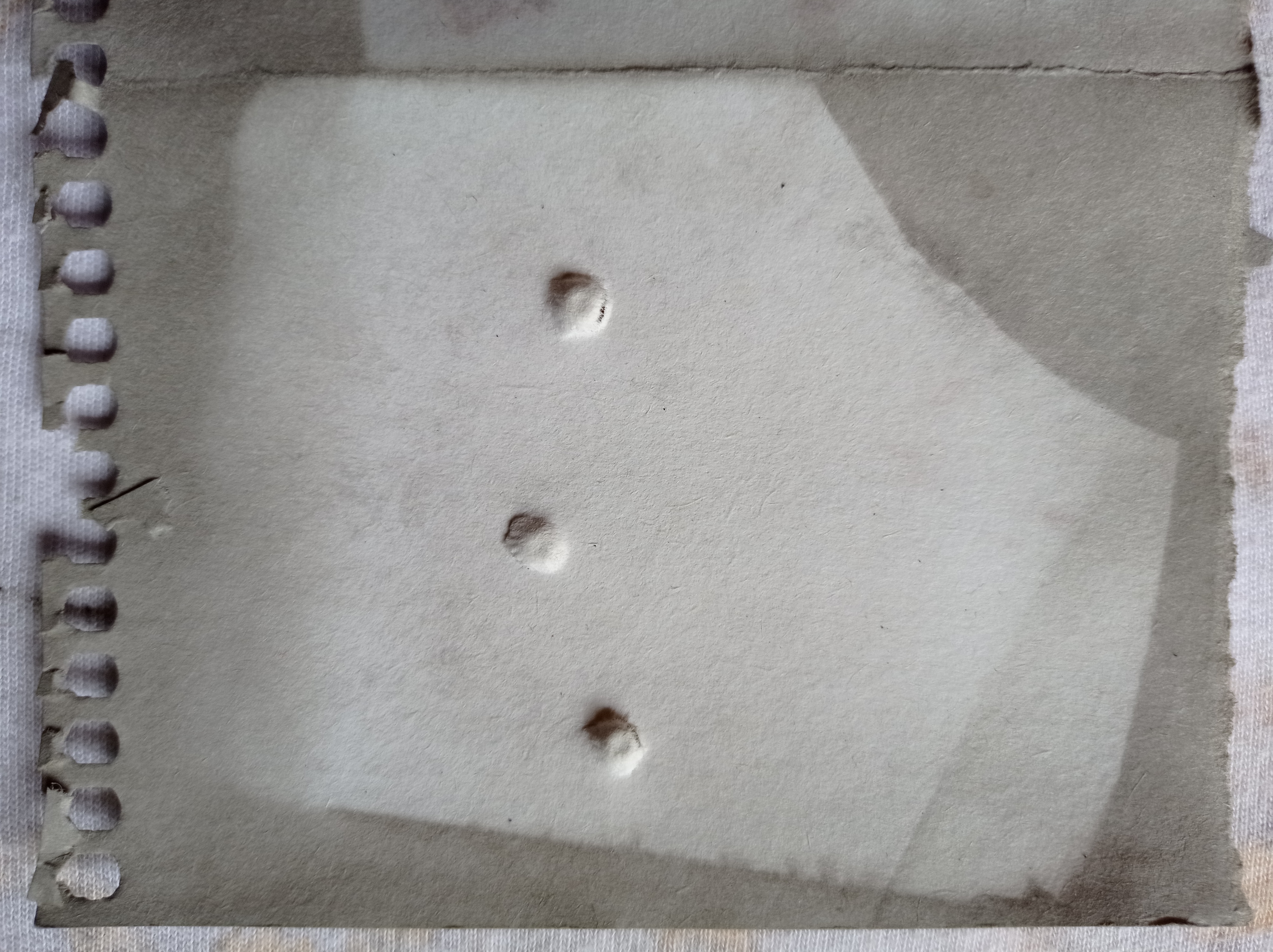
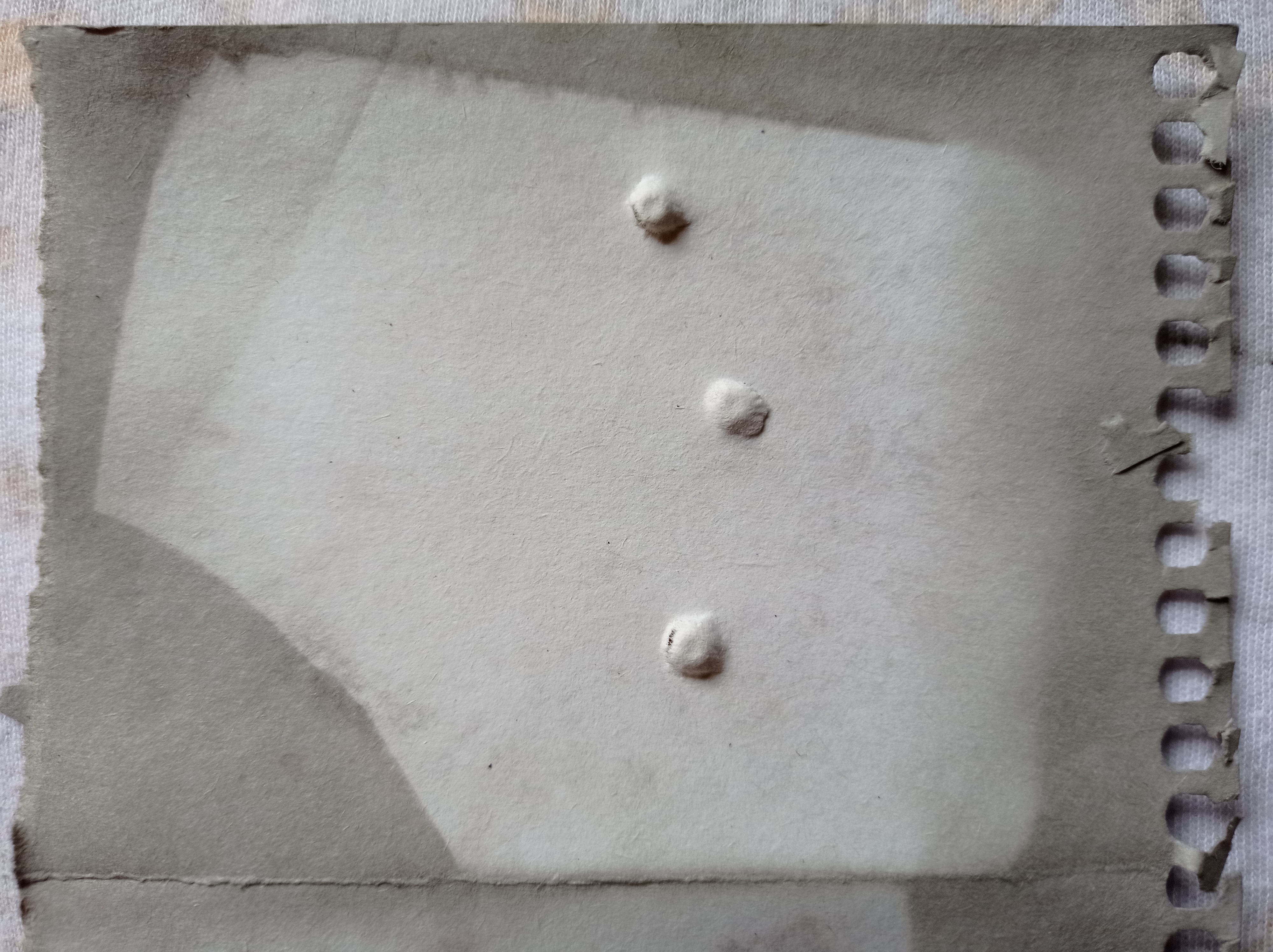
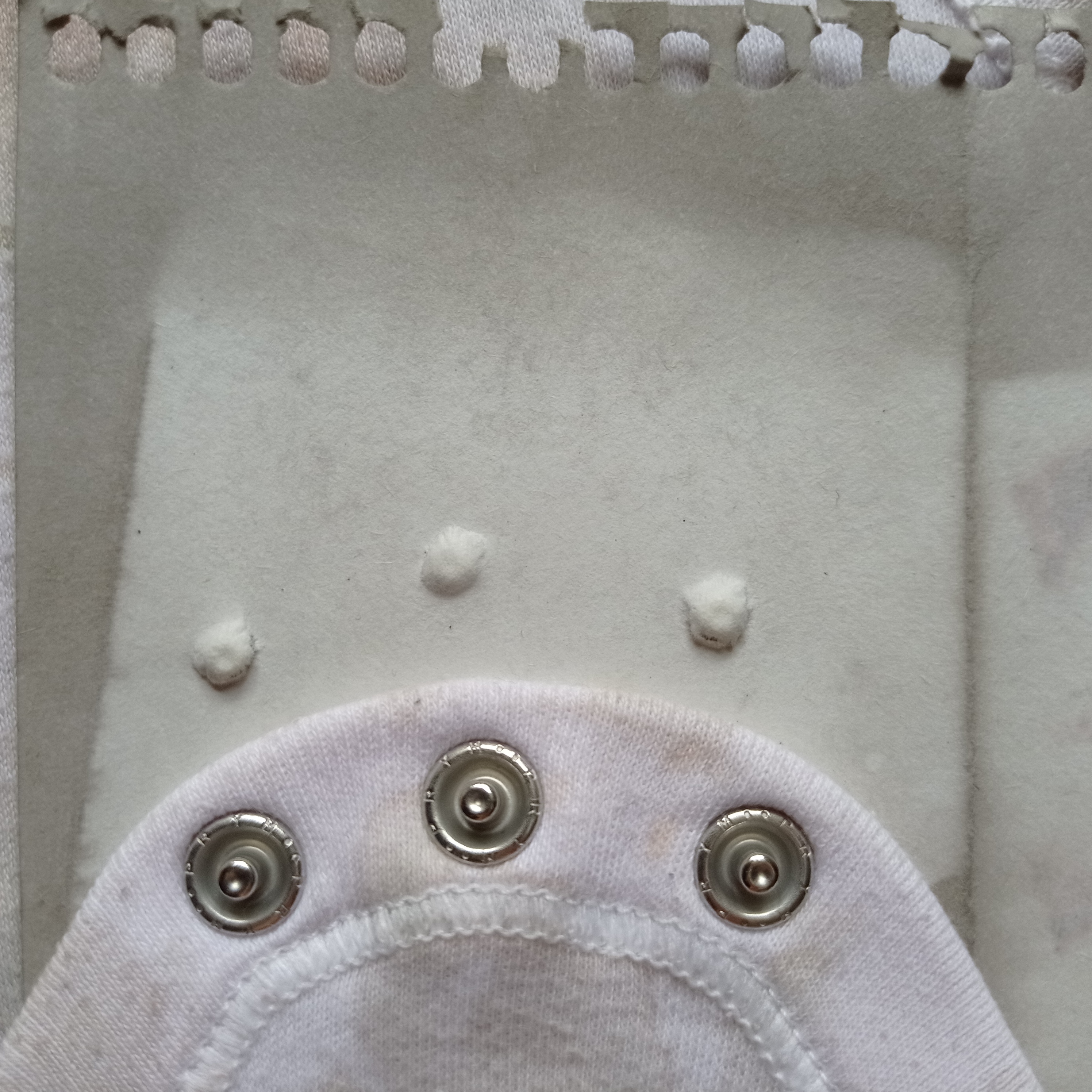
 to be two